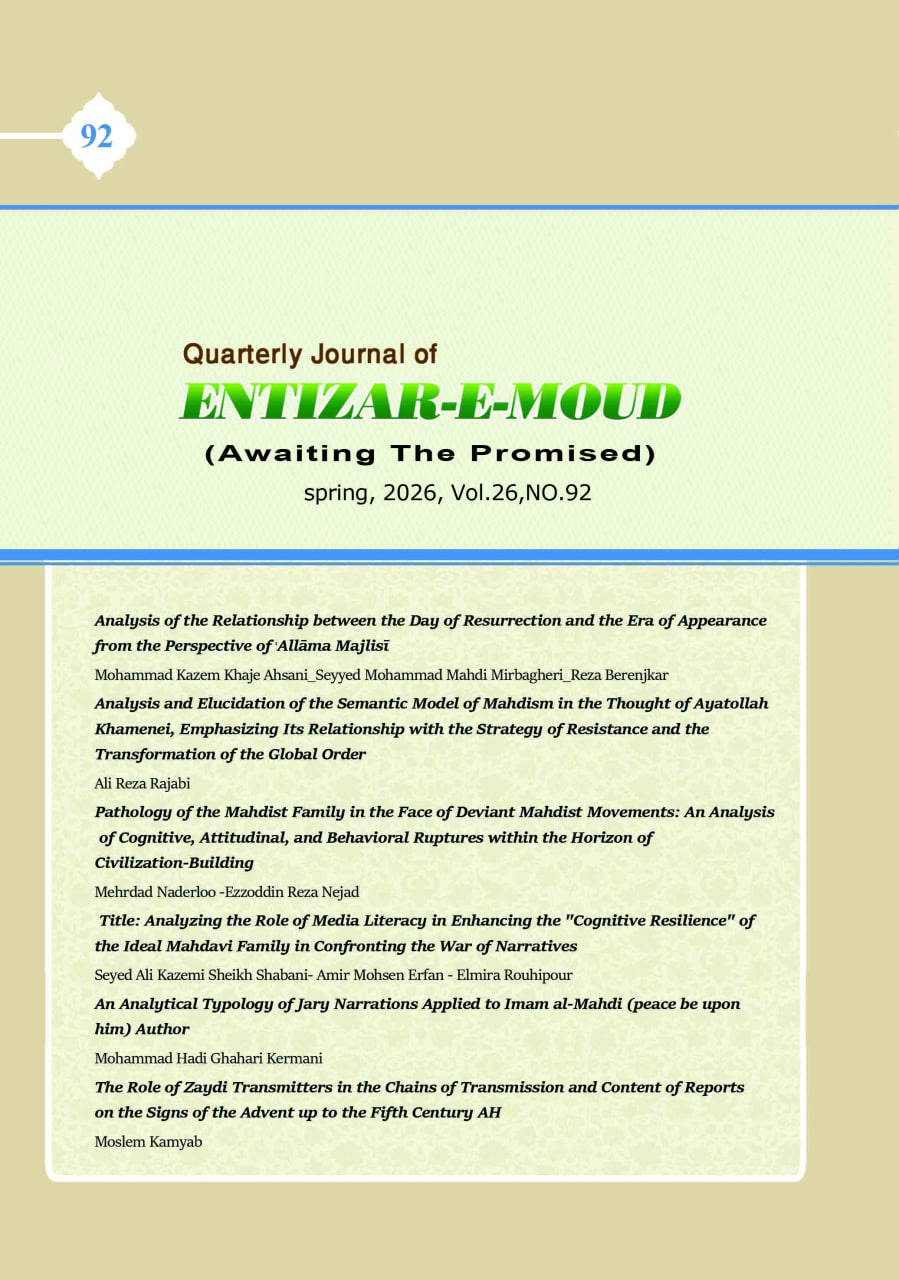
Pathology of the Mahdist Family in the Face of Deviant Mahdist Movements: An Analysis of Cognitive, Attitudinal, and Behavioral Ruptures within the Horizon of Civilization-Building
Document Type : Original Article
Authors
1
Level-4 Research Student, Specialized Center for Mahdism, Qom
2
Professor, Al-Mustafa International University, and Full Member of the Kalam Society of the Qom
Abstract
The family, within the discourse of the Islamic Revolution, is the primary institution for nurturing the generation that awaits the reappearance of the Imam (al-Muntaẓir) and serves as the cornerstone for the realization of the New Islamic Civilization. Nevertheless, the emergence of deviant Mahdist movements has posed serious challenges to the civilizational function of this institution. We employ a qualitative research design which is based on the Grounded Theory approach and benefit from the theoretical framework of Symbolic Interactionism. The present study investigates the ways in which these movements contribute to the disintegration of the Mahdist family structure.
The findings indicate that deviant Mahdist movements undermine the family's system of meaning through three interconnected dimensions: cognition (insight), attitude (orientation), and behavior (action). When it comes to the cognitive level, they weaken religious rationality through the distortion of fundamental symbols such as awaiting (intiẓār) and Wilāyah (Guardianship/Authority). They alter reference groups and redirect emotional attachments away from both the family unit and the larger religious community toward the deviant sect at the attitudinal level,. Finally, at the behavioral level, they divert the family from its intended role as an agent of civilizational initiatives by promoting isolationism, institutionalizing fabricated rituals, and sanctifying abnormal patterns of conduct. The study concludes that these movements transform dynamic and constructive awaiting into destructive awaiting, thereby reversing the essential function of the family within the framework of Islamic civilization.
The findings indicate that deviant Mahdist movements undermine the family's system of meaning through three interconnected dimensions: cognition (insight), attitude (orientation), and behavior (action). When it comes to the cognitive level, they weaken religious rationality through the distortion of fundamental symbols such as awaiting (intiẓār) and Wilāyah (Guardianship/Authority). They alter reference groups and redirect emotional attachments away from both the family unit and the larger religious community toward the deviant sect at the attitudinal level,. Finally, at the behavioral level, they divert the family from its intended role as an agent of civilizational initiatives by promoting isolationism, institutionalizing fabricated rituals, and sanctifying abnormal patterns of conduct. The study concludes that these movements transform dynamic and constructive awaiting into destructive awaiting, thereby reversing the essential function of the family within the framework of Islamic civilization.
Keywords
1. ابراهیمی، حاج عبد الرضا خان (بیتا). نود مسئله، بیجا، منتشر شده در سایت الابرار.
2. اخگری، محمدرضا (1367). ولایتیهای بی ولایت، تهران، نشر پرچم.
3. آرشیو مرکز تخصصی مهدویت، گروه ادیان و فرق، 1404، شماره 2.
4. آرشیو مرکز تخصصی مهدویت، 1404، شماره 3.
5. اسعدی، محمدمصطفی (1400). کارکردشناسی فرهنگی و تمدنی خانواده انگاری جامعه از دیدگاه قرآن کریم، نشریه علمی تاریخ فرهنگ و تمدن اسلامی، شماره42، (ص7-32).
6. اسعدی، محمدمصطفی، عرفان، امیر محسن (1399). الگوی گرایشی رشد فرهنگی انسان از دیداه قرآن کریم، مجله پژوهشهای قرآنی، شماره 2، پیاپی95، (ص5-28).
7. آقا تهرانی، مرتضی و حیدریکاشانی، محمدباقر (1393). خانواده و تربیت مهدوی، قم، نشر کتاب یوسف.
8. باقی، عمادالدین (1363). در شناخت حزب قاعدین (موسوم به انجمن حجتیه)، بیجا، نشر دانش اسلامی.
9. پایگاه اطلاع رسانی دفتر منصور هاشمی خراسانی (1399). بخش پرس و پاسخ، کد 493،
https://www.alkhorasani.com/fa/content/14253/
https://www.alkhorasani.com/fa/content/14253/
10. پایگاه اطلاع رسانی دفتر منصور هاشمی خراسانی (1395). بخش پرسش و پاسخ، کد203،https://www.alkhorasani.com/fa/content/7812/.
11. حسن، استیون (1400). مبارزه با کنترل ذهنی فرقهها، مترجم: معصومیزاده، سما، تهران، نشر وانیا.
12. حسینی خامنهای، سید علی (1398). تمدن اسلامی( مکتب انقلاب اسلامی)، تهران، نشر بنیاد فرهنگ و اندیشه انقلاب.
13. حسینی خامنهای، سید علی (1397). روشنای آینده، گردآورنده: هلودی، موسی، تهران، دفتر حفظ و نشر آثار آیت الله العظمی خامنهای.
14. حسینی خامنهای، سید علی (1398). زن و خانواده، گردآورنده: بانکیپور فرد، امیر حسین، تهران، دفتر حفظ و نشر آثار آیت الله العظمی خامنهای.
15. حسینی خامنهای، سید علی (بیتا). بیانات( سخنرانیهای رهبر جمهوری اسلامی ایران)، بینا، بیجا.
16. حسینی خامنهای، سید علی (بیتا). گام دوم، تهران، دفتر حفظ و نشر آثار آیت الله العظمی خامنهای.
17. ریتزر، جورج (1384). نظریه جامعهشناسی در دوران معاصر، مترجم: ثلاثی، محسن، تهران، نشر علمی.
18. سلیمی افجانی، محمدرضا (1403). بررسی تاثیرات اخلاقی، اعتقاد به مهدویت در خانواده اسلامی، مجله معرفت، شماره دوم، پیاپی، 317، (ص65-73).
19. سینگر، مارگارت تالر (1399). فرقهها در میان ما، مترجم: خدابنده، ابراهیم، تهران، نشر ماهریس.
20. شهریاری، روحالله (1402). مبانی و اصول رشد اخلاقی خانواده تراز تمدن نوین اسلامی از منظر بیانیه گام دوم انقلاب، مجله مطالعات سیاسی، ش5،(ص213-231).
21. کرمانی، حاج محمد کریم خان (1351). ازهاق الباطل فی رد البابیه، بیجا، انتشارات سعادت.
22. کرمانی، حاج محمدکریم خان (1313). سی فصل، بیجا، انتشارات گلزار حسنی.
23. مصاحبه با کارشناس، دکتر حجت حیدری چراتی، 9/9/1404.
24. مصاحبه با کارشناس، دکتر محمد شهبازیان، 12/9/1404.
25. مصاحبه با کارشناس، دکتر محمد شهبازیان، 24/9/1404.
26. معاونت پژوهش و آموزش مؤسسهی پژوهشی فرهنگی انقلاب اسلامی (1402). تمدن نوین اسلامی(رهنامه 39)، قم، انتشارات انقلاب اسلامی.
27. نصیری، مهدی (1398). عصر حیرت (جستاری کلامی پیرامون حکمرانی فقهی و تمدنسازی اسلامی در عصر غیبت و سیطره مدرنیته)، تهران، انتشارات مکتبه الصدیقه الشهیده.
28. ملکیراد، محمود (1398). نقش انتظار در تعالی خانواده، قم: نشر پژوهشگاه علوم وفرهنگ اسلامی.
29. Abd Razak, M. I., Abdul Rahim, R. A., Ramli, M. A., Hj. Kahal, S. M., & Mohamed Ratha, R. A. (2018). Analisis fahaman ekstremis agama dan media sosial di Malaysia (Analysis of extreme religion followers and social media in Malaysia). Asian Journal of Environment, History and Heritage, 2(1), 91–103.
30. Becker, Howard S, 1963. Outsiders: Studies in the Sociology of Deviance, New York, The Free Press.
31. Bulmer, Herbert, 1969.Symbolic Interactionism: Perspective and Method, Berkeley and Los Angeles, University of California Press.
32. Goffman, Erving, 1956. The Presentation of Self in Everyday Life. Edinburgh, University of Edinburgh, Social Sciences Research Centre.
33. Mead, George Herbert, 1934. Mind, Self and Society، From the Standpoint of a Social Behaviorist, Chicago, The University of Chicago Press.
34. Merton, Robert K, 1949. Social Theory and Social Structure, New York, The Free Press.
35. Thomas, William Isaac; Thomas, Dorothy Swaine, 1928. Child in America: Behavior Problems and Programs, New York, Alfred A. Knopf.