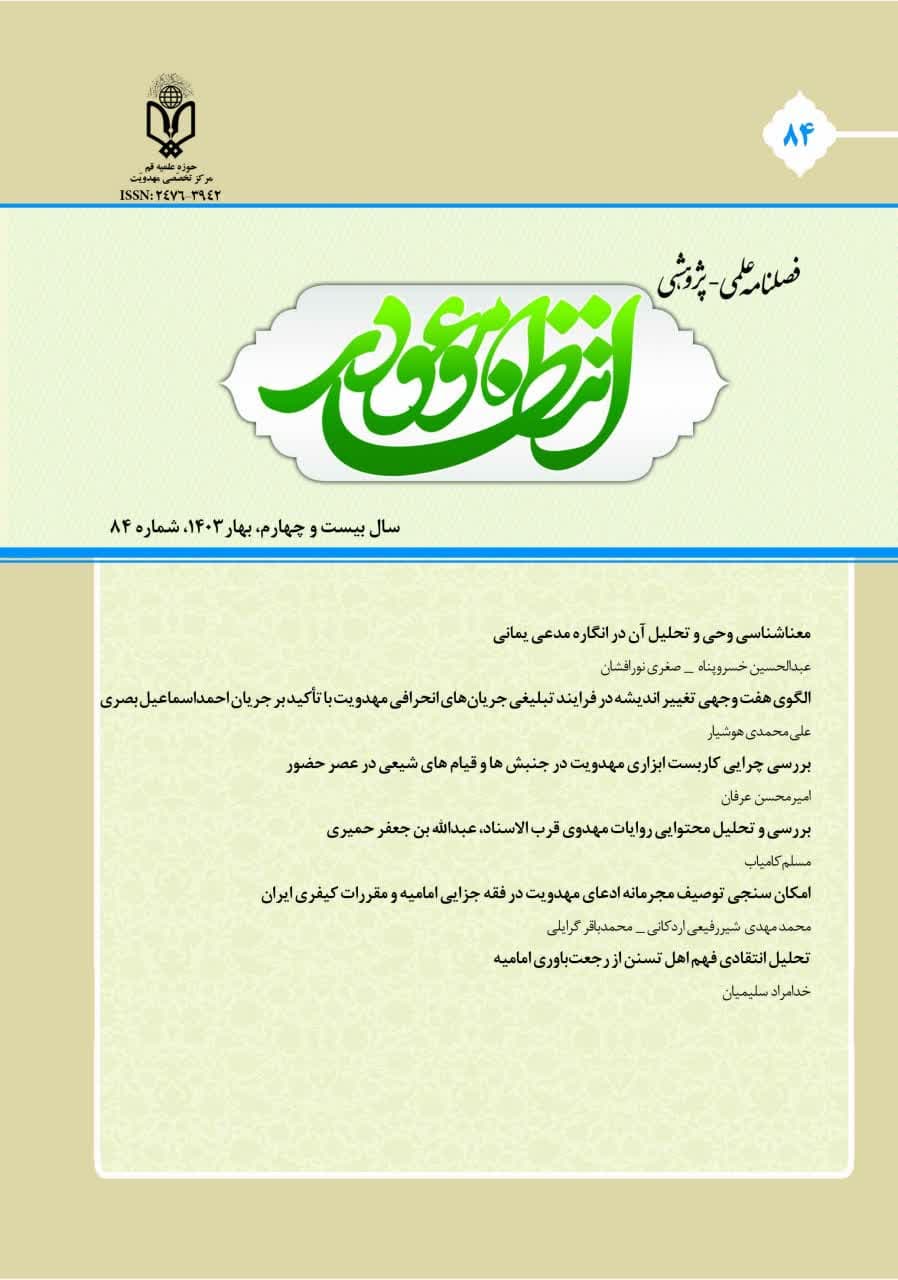
انتظار موعود

انتظار موعود

بررسی چرایی کاربست ابزاری مهدویت در جنبش‌ها و قیام‌های شیعی در عصر حضور

نوع مقاله : مقاله پژوهشی

نویسنده
استادیار گروه تاریخ و تمدن اسلامی، دانشگاه معارف اسلامی، قم، ایران
چکیده
این پژوهه با هدف اکتشاف علل رویکرد ابزاری به آموزه مهدویت در برخی قیام‌‌های شیعی عصر حضور سامان یافته است. برخی جنبش‌‌ها و قیام‌‌های شیعی درصدد سوء استفاده از این آموزه بوده‌‌اند و با اذعان به جایگاه این آموزه در تفکر شیعی تلاش کردند از ظرفیت این آموزه برای جذب نیرو، بیش‌‌ترین استفاده را ببرند. این محقق  روش «تبیینی – تحلیلی» را در پردازش محتوا مبنا قرار داده است، و بر حسب دستاورد یا نتیجه محقق  از نوع «توسعه‌ای – کاربردی» و به لحاظ نوع داده‌های مورد استفاده محقق،  کیفی است. پرسش این پژوهه آن است که چرا در برخی قیام‌‌های شیعی عصر حضور، مهدویت کاربستی ابزاری داشته است؟ بر اساس یافته‌‌های‌‌ این پژوهه، آموزه مهدویت «قدرت بسیج‌‌گری» اجتماعی دارد و در تاریخ نیز برخی قیام‌‌ها از این ظرفیت استفاده کرده‌‌اند. بهره‌‌مندی از «ظرفیت اقناع‌‌گری»، «هویت‌‌دهی» و «پیش‌‌کشندگیِ» آموزه مهدویت از دیگر علل کاربست ابزاری آموزه مهدویت در این قیام‌‌ها می‌‌باشد. نتایج تحلیل و ترکیب داده‌های جمع‌آوری شده نشان می‌‌دهد آموزه مهدویت قدرت انگیزشی مسلمانان در گرایش به رهبران قیام را افزایش می‌‌دهد.
کلیدواژه‌ها

عنوان مقاله English

Investigating the Reasons for the Instrumental Application of Mahdism in Shia Movements and Uprisings in the Era of Presence (of an Imam)

نویسنده English

Mohsen Eirfan
Assistant Professor, Department of Islamic History and Civilization, Islamic Education University, Qom, Iran
چکیده English

This research aims to investigate the reasons for the instrumental approach to the concept of Mahdism in some Shia movements during the era of presence. Some Shia movements and uprisings have attempted to abuse this concept, and while they acknowledge its significance in Shia thought, they have attempted to misuse its potential to its greatest to attract more mobilizing support. The researcher has employed an "explanatory-analytical" method for content processing, and based on the outcomes or results of the research, it is of a "developmental-applied" type, while in terms of the type of data used, it is qualitative research. The question of this research is why, in some Shia uprisings during the contemporary era, the concept of Mahdism has had an instrumental function. According to the findings of this study, the teaching of Mahdism has a social "mobilization power," and historically, some uprisings have benefited from this capacity. Benefitting from “Mahdism's "capacity for persuasion," "identity formation," and its "proactive" nature are other reasons for the functional application of this doctrine in these uprisings. The results of analyzing and synthesizing the collected data indicate that the doctrine of Mahdism increases the motivational power of Muslims towards their tendency and willingness to support the leaders of the uprisings.

کلیدواژه‌ها English

Shia
Mahdism
uprising
movement
era of presence (of an Iman)
claimants